

cost of 12mm toughened glass
Introduction In the world of precision manufacturing, the measurement platform serves as the cornerstone of quality control. Storan’s granite measurement platform, engineered to 00-grade precision, represents a leap forward in industrial accuracy. This article delves into the technical specifications, advantages, and applications of Storan’s platform, while exploring the scientific principles that make granite the ideal material for high-precision measurements. The Uncompromising Standard of 00 Grade Precision The 00-grade precision of Storan’s granite measurement platform ensures flatness tolerances as low as 1 micrometer (for a 100x100mm surface). This level of accuracy is critical in industries such as aerospace, semiconductors, and medical device production, where even minor deviations can lead to catastrophic failures. Unlike lower-grade platforms, 00-grade precision eliminates guesswork, ensuring that every component’s dimensional accuracy, flatness, and perpendicularity are validated against a surface that resists thermal expansion, vibration, and wear. Why 00 Grade Precision Matters In aerospace engine assembly, for example, Storan’s platforms act as the ultimate reference point, ensuring parts fit flawlessly and perform under extreme conditions. The platform’s stability is further enhanced by its non-porous surface, which repels dust and moisture, maintaining a clean and consistent measurement environment. This reliability is essential for high-volume production lines where downtime translates directly to lost revenue. The Science Behind Granite: HS70 Hardness and Stability Storan’s granite measurement platform leverages the unique properties of Jinan blue granite, which boasts a hardness rating of HS70+—surpassing steel (HS50-60) and marble (HS40-50). This exceptional hardness ensures the platform resists scratches, dents, and wear, even under heavy loads. The material’s low coefficient of thermal expansion (8.3x10⁻⁶/°C) further enhances its stability, minimizing deformation due to temperature fluctuations. Thermal and Mechanical Stability The non-porous, crystalline structure of granite also dampens vibrations, absorbing mechanical noise from nearby machinery. This stability is why aerospace engineers and semiconductor manufacturers trust Storan’s platforms. Even in cleanrooms or high-temperature workshops, the surface remains a dependable reference, eliminating variables that compromise precision. Product Specifications Table Feature Details Material Granite Grade 00 Hardness HS70+ Compressive Strength 245-254 N/m Water Absorption Less than 0.13% Elastic Coefficient 1.3-1.5×10⁶ kg/cm² Customization Yes Applications Industrial measurement, laboratory, precision parts assembly, vehicle maintenance Applications in Modern Industry Storan’s granite measurement platform is designed for a wide range of applications, including: Industrial measurement : Ensuring precision in manufacturing processes. Laboratory settings : Providing a stable reference for scientific experiments. Precision parts assembly : Critical for aerospace and automotive industries. Vehicle maintenance : Ensuring accurate alignment and calibration of components. Company Background: Storaen (Cangzhou) International Trading Co. Storaen (Cangzhou) International Trading Co., the manufacturer of Storan’s granite measurement platform, specializes in industrial measurement tools. With a commitment to quality and innovation, the company has established itself as a leader in providing precision solutions for global industries. Their expertise in granite processing and surface engineering ensures that every platform meets the strictest international standards. Why Choose Storan? Storan’s platforms are not just manufactured—they are meticulously crafted through precision grinding, lapping, and rigorous testing. This attention to detail ensures that every surface meets the highest standards of accuracy and durability. Whether you need a custom-sized platform for specialized machinery or a standard unit for routine inspections, Storan delivers the precision your operations demand. Visualizing the Product Below are images of the Storan granite measurement platform, showcasing its design and functionality: Expert Endorsement: NIST Standards and Measurement The importance of precision measurement is underscored by the work of the National Institute of Standards and Technology (NIST). According to NIST, "Accurate measurements are the foundation of modern technology, ensuring consistency and reliability across industries" ( NIST Measurement Standards ). Storan’s granite platforms align with these principles, providing a stable and accurate reference for industrial applications. Conclusion In an era where precision drives competitiveness, a 00-grade granite measurement platform is not just an option—it is a necessity. Storan’s commitment to engineering excellence ensures that its platforms meet the rigorous demands of modern manufacturing. By combining the natural advantages of granite with advanced processing techniques, Storan sets a new standard for industrial measurement. References National Institute of Standards and Technology (NIST) - Measurement Standards
about
cost of 12mm toughened glass
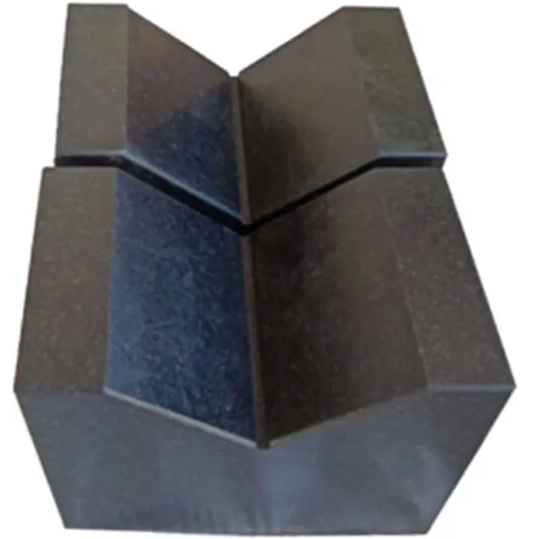
Understanding Magnetic V Blocks Size and Standards Magnetic V blocks are essential tools in various machining and mechanical engineering applications. These devices secure workpieces during processes such as grinding, milling, or cutting, providing stability and precision. The design of V blocks, characterized by their triangular grooves (the V shape), allows them to hold cylindrical or elongated materials effectively. However, their functionality hinges on an important factor size. This article explores the significance of magnetic V block size and the standards related to their use. The Importance of Size The size of a magnetic V block is vital for its effectiveness. A well-sized V block ensures that it can grip the workpiece securely without any slippage, which is crucial for achieving precision in machining processes. When selecting the size, engineers must consider both the dimensions of the workpiece and the specifications of the machine being used. A standard V block typically features dimensions that cater to various workpiece sizes, but variations are available for specific applications. For instance, standard sizes might range from small blocks designed for intricate components to larger blocks capable of holding heavier and more substantial items. Using a V block that is too small can lead to insufficient support, resulting in vibrations or movement during machining, which may compromise the quality of the finished product. Conversely, a block that is too large may be cumbersome, making it difficult to align and operate with precision. Magnetic Features magnetic v block size and standard The magnetic component of the V block is another critical aspect of its design. Most magnetic V blocks come with a powerful magnetic base that allows for strong adhesion to ferrous surfaces. This magnetic feature is especially beneficial in setups where traditional clamping methods may not be feasible. The magnet can be activated or deactivated with a simple switch, allowing for quick adjustments and repositioning of the workpiece. The effectiveness of the magnet can also depend on the size of the V block. A larger block typically has a larger surface area to accommodate magnets, leading to increased holding power. This is particularly important in applications requiring stability during high-speed machining processes where even the slightest movement can result in errors. Industry Standards The manufacturing and use of magnetic V blocks are subject to various industry standards to ensure quality and reliability. Some of these standards are established by organizations such as the American National Standards Institute (ANSI), the International Organization for Standardization (ISO), and other industry-specific governing bodies. These standards define the criteria for dimensions, material specifications, magnetic strength, and overall safety. When choosing a magnetic V block, it is essential to select one that adheres to these established standards. This ensures not only the tool's performance but also its compatibility with other equipment and components used in machining environments. Conclusion In summary, the size and standards of magnetic V blocks play pivotal roles in their effectiveness within machining and engineering processes. Selecting the appropriate size ensures that workpieces are securely held, promoting precision and safety during operations. The magnetic capabilities enhance the versatility of these tools, providing significant advantages over traditional clamping methods. Adhering to industry standards ensures that the blocks meet quality expectations and perform reliably across various applications. As industries continue to evolve and demand greater precision, the significance of understanding magnetic V block size and standards will only grow, making this knowledge indispensable for professionals in the field.
-

High quality industrial productsagement

High quality industrial products
View Details -

Meet the diverse needs of customers

Meet the diverse needs of customers
View Details -

Strict quality control

Strict quality control
View Details -

Top raw materials

Top raw materials
View Details -

Trusted supplier

Trusted supplier
View Details
Our application

news and information
Versatile Six-Sided Aluminum Alloy Angle Measuring Tool for Precision Measurement and Layout Tasks
Understanding the Six-Sided Aluminum Alloy Angle Measuring Tool In the realm of precision engineerin
Y Type Suction Strainer Overview and Applications in Fluid Systems
Understanding Y-Type Suction Strainers A Vital Component in Fluid Systems In various industrial appl
various types of control valves
Various Types of Control Valves Control valves are critical components in a range of engineering app
 English